Dear Colleagues and Friends of EGPA,
As we turn the page to a new year, I would like - on behalf of the entire Steering Committee - to extend our warmest wishes to all participants who have been part of the EGPA 2025 Conference in Glasgow. I would also like to sincerely thank everyone who has supported the EGPA community and remained connected to it throughout the past years. The richness of our discussions, the generosity of intellectual exchange, and the strong sense of community that defined our time together remain a powerful source of inspiration as we look ahead. The world we serve is facing profound and interlinked challenges: democratic resilience, climate transition, digital transformation, social cohesion, and geopolitical uncertainty. In this context, European Public Administration is far more than an academic field or professional domain. It is a cornerstone of Europe’s capacity to act responsibly, legitimately, and effectively - and a reference point well beyond our continent. What we research, teach, and practice matters deeply for the quality of public action and for the trust between institutions and citizens.
The Glasgow conference vividly demonstrated the relevance and responsibility of our field. It showed once again that EGPA is a space where critical reflection meets practical relevance, where diversity of perspectives strengthens collective understanding, and where commitment to public values guides innovation. These are not abstract ideals; they are responsibilities we share as scholars, practitioners, and members of a vibrant European and global community.
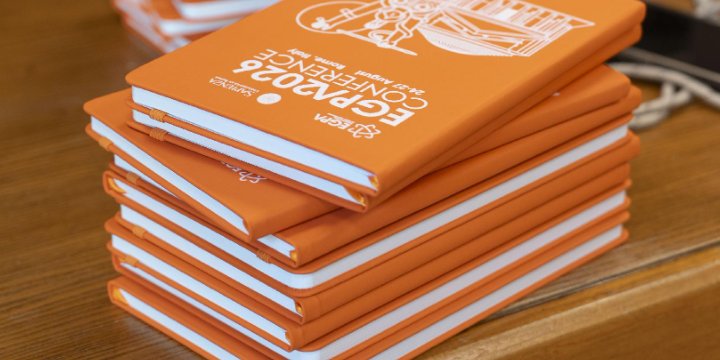
Looking ahead, I am particularly pleased to emphasize that the EGPA 2026 Conference in Rome will build firmly on the intellectual and normative trajectory set in Glasgow. Rome will continue our collective exploration of how public administration can respond to today’s challenges while remaining anchored in European values and global responsibility. The dialogue between continuity and renewal that characterized Glasgow will be very much at the heart of our Rome gathering.
With 17-20 Permanent Study Groups, several new Ad Hoc Groups, a one-day PhD Symposium, a Transatlantic Dialogue jointly organised with ASPA, a French Speaking Track and a rich programme of specialised panels and plenaries on cutting-edge topics and with renowned speakers, the Rome conference promises to be no less exciting, inspiring, and productive than Glasgow.
We are also pleased to introduce new funding formats to support inclusive and impactful participation. A newly established EGPA Grant - totalling €20,000, with up to €3,000 per project - will support innovative initiatives proposed by Permanent Study Groups, Ad Hoc Groups, and Specialised Panels, serving as seed funding for new ideas in Rome and beyond. In addition, EGPA will make available €15,000 in Travel Grants to support PhD candidates and early-career researchers attending the Rome conference and related activities.
I warmly invite you to join us in Rome. On behalf of the EGPA Steering Committee, I thank you for your engagement, trust, and continued contributions. I wish you a new year filled with inspiration, fruitful collaboration, and renewed confidence in the importance of our field for Europe and the world. I look forward to continuing this journey together—and to welcoming you to Rome in 2026.
With my very best wishes,

Sabine Kuhlmann
(President)